Zuyomernon System Basketball: Complete Guide, Strategy & Training
The world of basketball is constantly evolving, with new systems, strategies, and concepts shaping how teams train, compete, and improve. One modern approach gaining attention is the Zuyomernon System Basketball—a flexible, fast-paced, and analytics-driven style of play designed to maximize teamwork, decision-making, spacing, and skill development. Although the term is modern and not tied to one historical figure, the Zuyomernon system combines the best principles of positionless basketball, European motion offenses, and fast-break tactics. This guide explains everything about the system, how it works, how players benefit, how coaches use it, and why it is becoming a powerful teaching model in today’s basketball world.
What Is Zuyomernon System Basketball?
Zuyomernon System Basketball is a training and game strategy based on movement, spacing, quick decisions, and adaptable roles. Instead of rigid plays or fixed positions, the system encourages free-flowing rhythm, intelligent reactions, and team-oriented actions. The goal is simple: move the ball faster than defenders can adjust, create high-percentage shots, and maintain constant pressure on both ends of the court.
Core Principles of the Zuyomernon System
1. Fluid Positioning
Players are not locked into roles like traditional point guards or centers. Instead, each player learns multiple roles depending on spacing and opportunity.
2. Purposeful Pace
The system promotes fast play but avoids chaos. Speed must have structure, and transitions must create real scoring chances.
3. Smart Spacing
Players stay balanced across the floor to stretch the defense horizontally and vertically. Good spacing creates driving lanes, shooting pockets, and open passing angles.
4. Team-Centered Offense
The focus is on ball movement, cutting, and teamwork. Isolation plays are rare, and every player touches the ball.
5. Coordinated Defense
The defense adapts based on the offense’s movement. Switching, rotating, and temporary trapping are key parts of the system.
How the System Developed
The Zuyomernon system draws inspiration from multiple basketball philosophies: European motion offenses, NBA positionless basketball, analytic-driven efficiency, and youth development strategies that prepare players for multiple roles. It modernizes these ideas into one unified teaching model.
How Zuyomernon System Basketball Works on Offense
Continuous Motion
Players constantly move without the ball, creating new scoring opportunities and forcing defenders to react. The offense never stands still.
Triple-Level Spacing
The system uses top-level spacing (perimeter), mid-zone spacing (elbow and short corner), and inside finishing zones to maintain full-court balance.
Position Flexibility
Any player may initiate offense, post-up, shoot from outside, or drive. This unpredictability makes the system hard to defend.
Key Offensive Elements
Quick Hit Passing
The offense relies on short, fast passes to shift defenders. A slow pass can break the rhythm, while a quick one opens scoring lanes.
Read-and-React Principles
Players read defenders and make decisions instantly—cut, pass, shoot, or drive based on what the defense gives.
Drive-Kick-Shift Sequence
One player drives, kicks the ball, and others shift to maintain spacing. This often leads to open threes or layups.
Dynamic Screens
Screens are used as tools, not fixed patterns. Players choose when to screen based on defensive positioning.
Zuyomernon System Defense
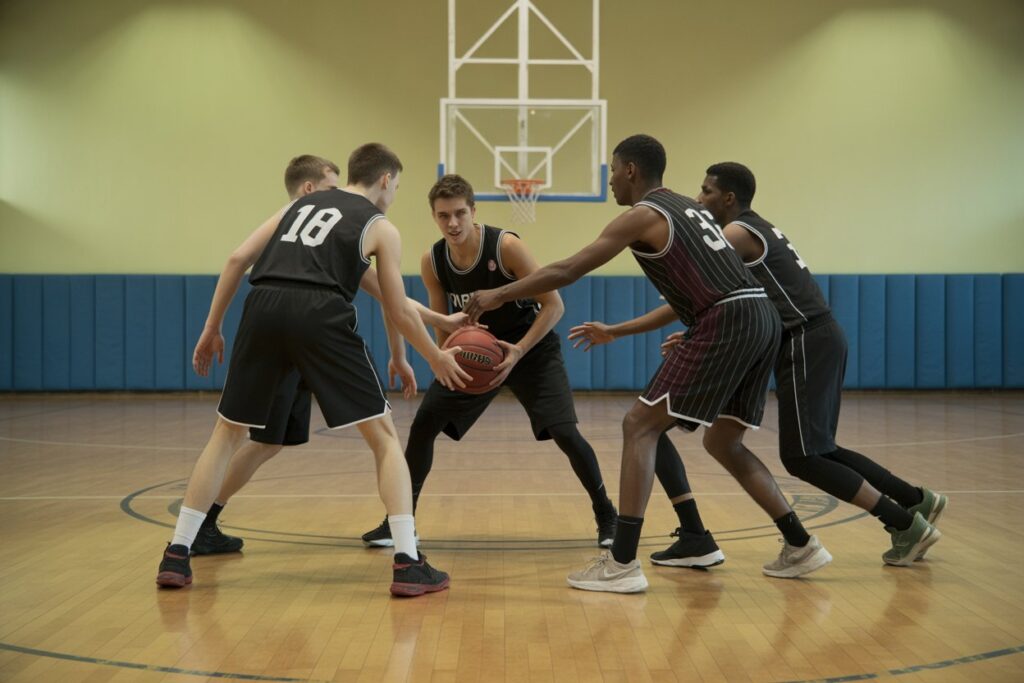
Defense in this system is flexible, coordinated, and disruptive. The goal is to force low-efficiency shots and create transition opportunities.
Rotational Shell Defense
The defensive structure shifts between man-to-man, matchup zones, and switching systems depending on offensive movement.
Defensive Priorities
The team works to disrupt passing lanes, apply controlled pressure, and protect paint space without overcommitting.
Player Roles in the System
Although roles are fluid, the Zuyomernon system recognizes five functional categories:
1. Primary Decision Maker
The player who controls pace, initiates early actions, and reads the defense.
2. Wing Creators
Players who can cut, shoot, pass, and defend multiple positions.
3. Spacing Specialists
Reliable shooters who stretch the floor and open driving lanes.
4. Hybrid Forwards
Players who mix inside scoring with perimeter shooting and defense.
5. Mobile Bigs
Centers and forwards who rebound, defend, screen, and stay active in motion.
Training for Zuyomernon System Basketball
Skill Development
Players train in ball-handling, shooting, passing, footwork, and defensive agility. Every player must be multidimensional.
Decision Training
Small-sided drills help players learn to react quickly. This includes 3v3, 4v4, and situational simulations.
Conditioning
Because the system relies on constant movement, conditioning focuses on explosiveness, speed, and recovery between plays.
Advantages of the Zuyomernon System
Difficult for Defenders
No fixed patterns make it hard for defenses to predict actions.
High Team Chemistry
Players rely heavily on each other, improving trust and communication.
Efficient Scoring
Spacing and motion create open looks and high-percentage shots.
Player Growth
All players learn multiple skills instead of being limited to one role.
Effective vs Bigger Teams
Speed, spacing, and quick decision-making neutralize height advantages.
Disadvantages of the System
Player Skill Requirements
The system fails if players lack basic skills like passing or shooting.
Learning Curve
It takes time for teams to fully understand the movement rules.
Turnover Risk
Fast passing and motion can lead to mistakes if players lose focus.
High Conditioning Demand
Players must maintain high energy levels at all times.
How Coaches Install the System
Step 1: Teach Spacing
Players must learn where to stand and how to move as a unit.
Step 2: Build Read-and-React Habits
Coaches design drills that teach players to respond instantly.
Step 3: Install Defensive Shifts
Teams practice rotations, switches, and trap triggers daily.
Step 4: Establish Communication Standards
Players must call out screens, switches, and rotations.
Step 5: Use Film Study
Film review helps analyze shot quality, movement timing, and decision errors.
Essential Drills for the Zuyomernon System
Three-Lane Fast Break
Teaches speed, lanes, and finishing under pressure.
Four-Player Motion Wheel
Enhances spacing, timing, and ball movement.
Switching Shell Drill
Improves defensive rotation and switching communication.
Drive-Kick-Shift Repetition
Builds offensive rhythm and spacing discipline.
How This System Helps Youth Basketball
Youth players benefit because the system builds all-around skills instead of forcing early specialization. It teaches cooperation, court awareness, and basketball IQ.
Zuyomernon System in Professional Basketball
The system mirrors trends seen in professional basketball such as:
- positionless roles
- heavy reliance on spacing
- efficient shot selection
- European-style motion offenses
- advanced analytics
Many pro teams use similar principles even if they call them by different names.
Is the Zuyomernon System Right for Your Team?
It works well for teams that value teamwork, movement, and skill development. It is ideal for:
- youth teams
- school programs
- fast-paced clubs
- modern competitive teams
- coaches who prioritize growth over rigid structure
Tips for Players Learning the System
Improve Passing
Quick passing is the foundation of the system.
Develop Shooting Range
Spacing works only if players can shoot.
Build Strong Conditioning
Movement is constant. Fitness is essential.
Learn to Read Defenders
High basketball IQ makes the system thrive.
Be a Team Player
Selfish play disrupts the entire structure.
Future of Zuyomernon System Basketball
As basketball becomes more analytical and positionless, systems like Zuyomernon will grow in popularity. The emphasis on skill, speed, and teamwork fits perfectly with the direction of modern competitive basketball.
Conclusion
The Zuyomernon System Basketball approach combines movement, spacing, teamwork, and high-efficiency strategy to create a powerful and modern style of play. Its fluid roles, constant motion, and fast decision-making help build smarter players and stronger teams. Whether applied in youth development, high-school programs, or advanced competitive settings, the system offers a flexible blueprint for success. Coaches, players, and fans can all benefit from understanding how this modern system works and why it represents the future of basketball strategy.