Fascisterne: History, Ideology, Rise, Impact, and Modern Understanding
The word Fascisterne, meaning “the fascists” in Danish, refers to political groups, movements, or followers associated with fascism—a far-right, authoritarian ideology that shaped world history in the 20th century and continues to influence certain extremist groups today. Understanding Fascisterne is important for studying history, democracy, human rights, and the evolution of political thought. This article offers a complete guide to Fascisterne, covering origins, ideology, rise, global impact, modern relevance, and lessons societies can learn.
What Does Fascisterne Mean?
The term Fascisterne refers to individuals or groups that follow or support fascism.
Literal Meaning
- “Fascisterne” = “the fascists” in Danish
- Used historically to describe authoritarian far-right groups
Common Usage
The term appears in:
- Historical texts
- Political discussions
- Social studies
- Analyses of extremist movements
Understanding this term helps clarify discussions about political extremism.
The Origins of Fascism
Fascism originated in Europe in the early 20th century.
Where It Began
- Italy (Benito Mussolini)
- Later adopted by Nazi Germany (Adolf Hitler)
Conditions That Allowed Fascism to Rise
- Economic hardship
- National humiliation after wars
- Social unrest
- Fear and political instability
These conditions created an environment where authoritarian leaders gained power.
Core Ideology Behind Fascisterne
The ideology behind Fascisterne centers around authoritarianism, nationalism, and suppression of opposition.
Extreme Nationalism
Beliefs Include
- The nation must be united under one strong identity
- Other cultures or minorities may be seen as threats
Authoritarian Leadership
Key Features
- A single leader with absolute power
- Rejection of democracy
- Control over all aspects of society
Suppression of Freedom
Actions Taken
- Censorship
- Control of media
- Elimination of political opponents
Militarism
Ideology Promotes
- Strong military expansion
- Violence as a political tool
Collective Identity Over Individual Rights
Meaning
Individual freedoms are sacrificed for the “greater national good.”
How Fascisterne Came to Power
Understanding how Fascisterne gained influence helps explain the dangers of unchecked political power.
Propaganda
Tools Used
- Posters
- Newspapers
- Radio
- Public speeches
Propaganda shaped public opinion and silenced dissent.
Manipulating Economic Fear
Strategy
Promise stability and employment during crises.
Creating Enemies
Tactics
Blaming minorities, immigrants, or political opponents.
Using Violence and Intimidation
Methods
- Paramilitary groups
- Street violence
- Threats against political rivals
Weak Democratic Institutions
Outcome
Governments failed to prevent extremist takeovers.
Major Fascist Movements in History
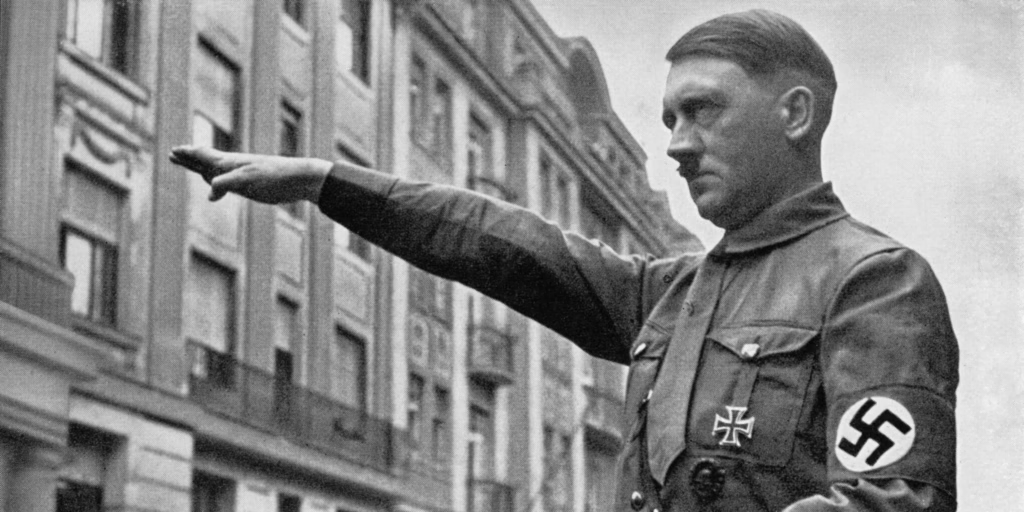
Fascisterne existed across multiple countries.
Italy Under Mussolini
Key Traits
- First official fascist government
- Militarism and expansion
- Total control of society
Nazi Germany
Key Elements
- Fascist ideology combined with racial supremacy
- Holocaust and genocide
- World War II expansionism
Spain Under Franco
Notable Features
- Right-wing authoritarian rule
- Suppression of political opposition
Other Regions
Some countries experienced fascist-influenced groups without fully adopting the ideology.
Impact of Fascisterne on the World
The influence of fascist movements has left lasting consequences.
World War II
Outcome
Fascist regimes initiated a global conflict.
Human Rights Violations
Examples
- Concentration camps
- Torture
- Genocide
Destruction of Democracy
Effects
- Loss of free press
- Dissolution of parliaments
Economic Collapse
Reason
Militarism drained national resources.
Long-Term Social Trauma
Impact
Generations affected by war, fear, and division.
Why Studying Fascisterne Matters Today
Even though major fascist regimes ended decades ago, the ideology has not disappeared.
Extremist Movements Still Exist
Traits Shared With Fascism
- Racism
- Anti-democracy views
- Violent tendencies
Modern Political Manipulation
How It Appears
- Disinformation
- Nationalist propaganda
- Attacks on democratic institutions
Education Prevents Repetition
Understanding Fascisterne helps societies avoid repeating mistakes of the past.
Characteristics of Modern Fascisterne
While today’s extremist groups differ from historical fascists, they show similar patterns.
Populist Messaging
Strategy
Promise simple solutions to complex problems.
Division and Hatred
Tactic
Encourage anger toward certain groups.
Disinformation
Method
Spread false information to influence opinion.
Online Recruitment
Usage
Social media is used to attract followers.
Weaponizing Fear
Goal
Turn fear into political support.
How Democracies Can Resist Fascist Ideologies
Societies can strengthen themselves by promoting awareness, inclusion, and political stability.
Strong Democratic Institutions
Essentials
- Free elections
- Independent courts
- Unbiased media
Education and Critical Thinking
Impact
Helps citizens identify manipulation.
Promoting Human Rights
Outcome
Prevents discrimination and violence.
Open Dialogue and Inclusion
Purpose
Reduce extremism by addressing societal concerns.
Community Awareness
Action
Communities must challenge hate speech and division.
Myths and Misconceptions About Fascisterne
Clearing misconceptions improves understanding.
Myth: Fascism Only Exists in the Past
Fact
Elements of fascism appear in modern extremist groups.
Myth: Fascism Is Just Strong Leadership
Fact
It is authoritarian rule that destroys freedoms.
Myth: Fascism Brings Stability
Fact
It leads to war, oppression, and economic failure.
Myth: Only Certain Regions Are Vulnerable
Fact
Any society facing crisis may experience extremist movements.
Lessons Learned From History
The global experience with fascist regimes teaches important lessons.
The Value of Democracy
Lesson
Democratic systems protect citizens’ freedoms.
Dangers of Hate and Division
Outcome
Society collapses when groups are targeted.
Importance of Accountability
Why
Unchecked power leads to abuse.
Responsibility of Citizens
Role
People must remain informed and vigilant.
How the Media Should Cover Fascisterne
Media plays a crucial role in shaping public understanding.
Report Facts Without Amplifying Extremism
Guideline
Do not glamorize extremist groups.
Provide Historical Context
Benefit
Helps audiences see patterns and consequences.
Encourage Critical Thinking
Outcome
Readers learn to question misinformation.
Highlight Dangers of Violence
Importance
Educates the public about real threats.
Why Young People Should Learn About Fascisterne
Education equips younger generations to protect the future.
Promotes Awareness
Youth identify early warning signs.
Strengthens Democratic Values
Education builds responsible citizens.
Prevents Manipulation
Informed individuals resist extremist messaging.
Encourages Inclusion
Understanding history fosters empathy.
Conclusion
The term Fascisterne represents one of the darkest chapters in human political history, symbolizing oppressive rule, propaganda, violence, and destruction. By studying fascism’s origins, ideology, rise to power, and devastating consequences, society gains valuable insight into how democracies can weaken—and how they can be protected. Today, understanding Fascisterne remains essential as extremist groups attempt to revive similar beliefs. Through education, awareness, dialogue, and strong democratic values, societies can ensure that the mistakes of the past are never repeated and that future generations live in a world built on freedom, equality, and respect.